Getting your first users2 min read
Build supply before you build the marketplace
A marketplace with nobody on one side loses the people who arrive on the other.
By Bernard Tay, Product Engineer ·
The problem
A marketplace plan usually starts with the exchange: someone posts a job, someone else bids, money changes hands. Every one of those steps assumes both sides have already turned up.
Early on, they have not. A customer who posts a job and hears nothing back is a customer you will probably not see again. Meanwhile, the supplier who joins and finds no work stops coming back.
Hiring a plumber, carpenter or tailor often runs on word of mouth. A marketplace can improve that, with prices you can compare and reviews you can believe, but only once there is someone to compare.
Signs you have this problem
- Your launch plan has one date for both sides.
- Success depends on a customer finding several offers on their first visit.
- You cannot say which side is harder to attract.
- Your product offers suppliers nothing until a job arrives.
What it costs
Launching both sides at once splits a small budget between two groups who are each waiting for the other.
- Marketing money brings people into an empty room.
- First impressions are spent before the product can deliver.
- The team keeps adding features while the real gap is supply.
How I approach it
I built Artisan Hub with priced proposals, in-app messaging and reviews tied to completed jobs. Those pieces work when both sides are present. If I started again, I would keep them and change the order.
- A useful directoryVerified artisan profiles that are worth visiting from day one.
- Depth in a few placesEnough artisans in a trade and an area for a client to have a real choice.
- Then the biddingJob posting and proposals added once supply exists.
- Reputation that buildsReviews from completed work become a reason for both sides to stay.
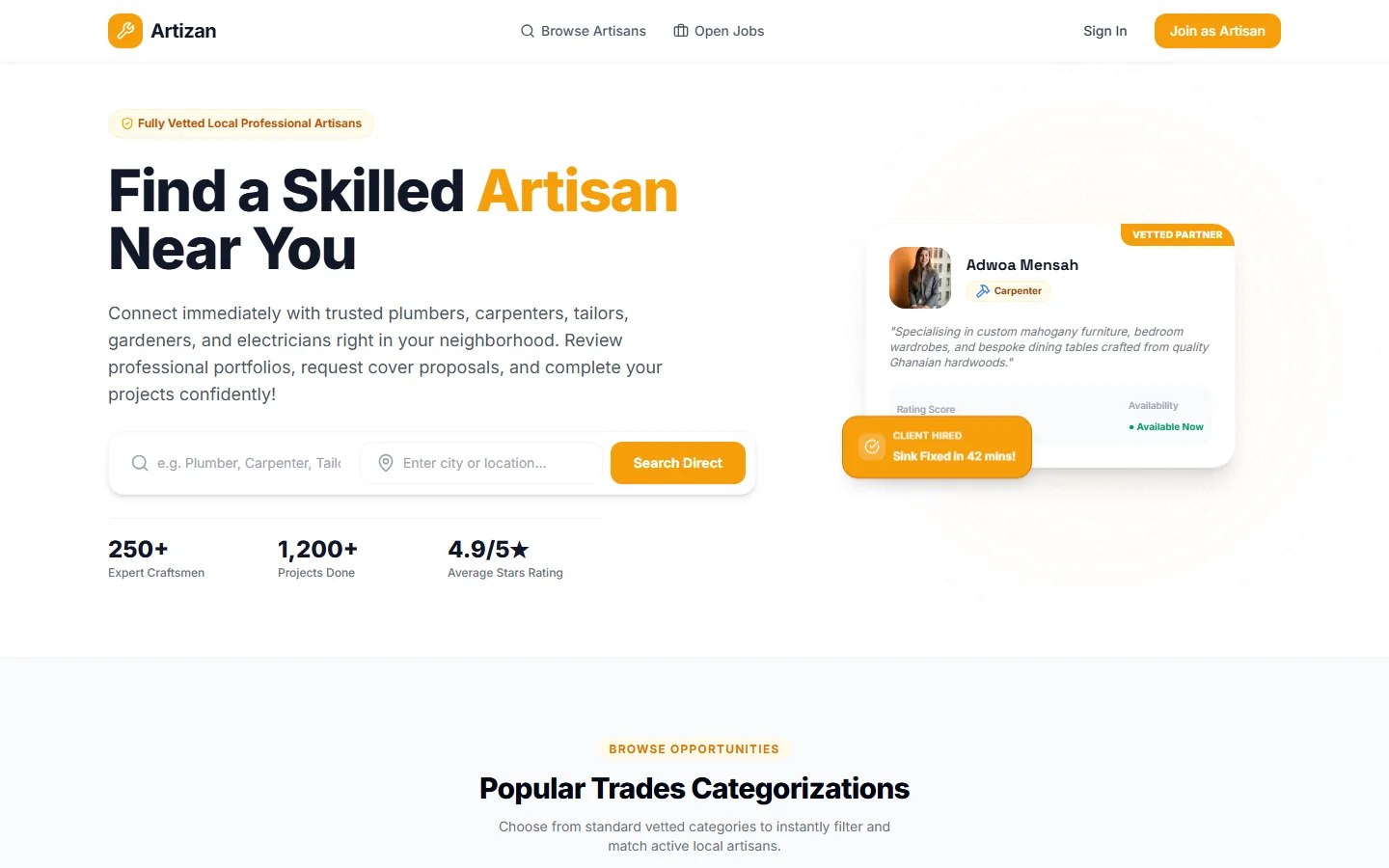 The project behind thisArtisan Hub
What you can do this week
- 1Pick the harder sideIt is often whoever has to do more to join. Write down why they would sign up before any customer arrives.
- 2Give them something of their ownA profile they can share, a record of their work or a simple tool that helps them today.
- 3Start narrowOne trade in one area with real choice beats ten trades with one name each.
- 4Match by hand firstConnect your first customers yourself. You will learn what the product actually needs to automate.
Ask which side is harder to win, and give them a reason to join that does not depend on the other side being there yet. The hard part of a marketplace is the order you build it in.
Check your own business
Are you ready to open both sides?
Tick everything that is true today.
Talk it through with me